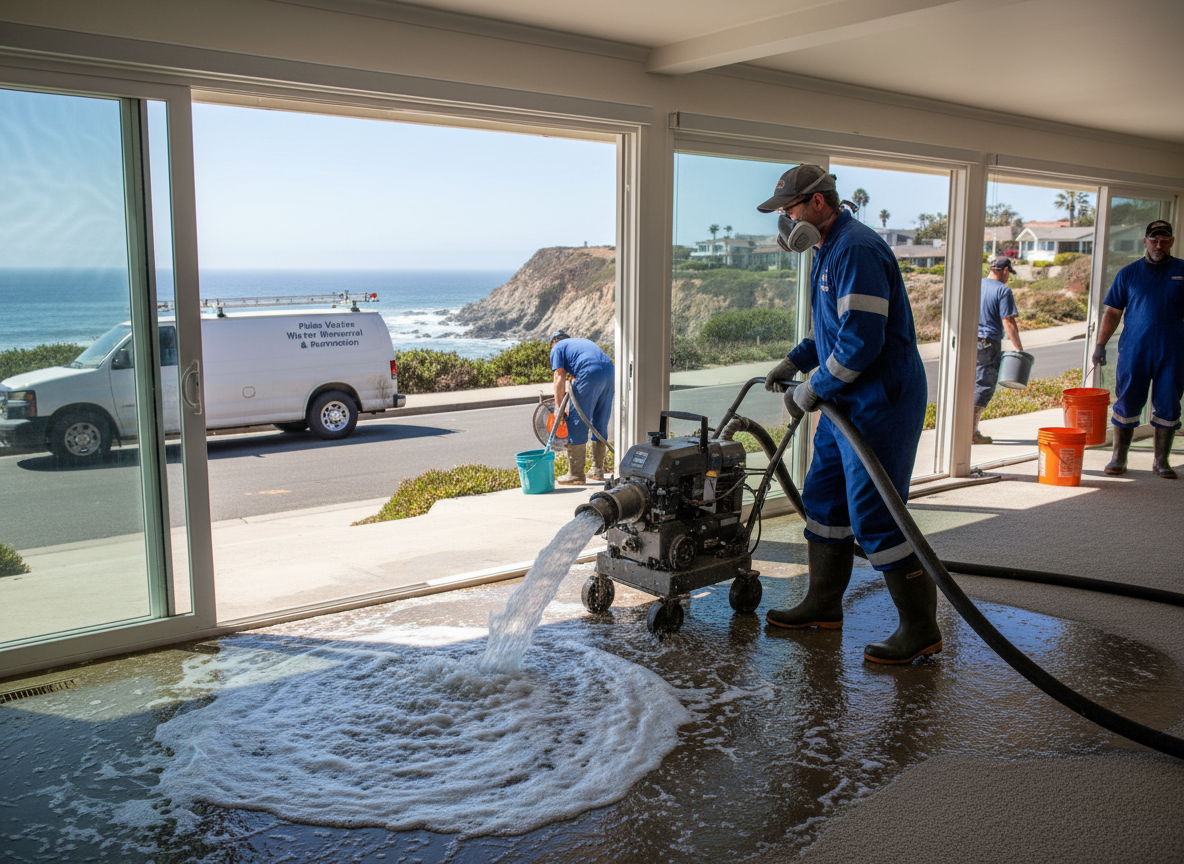
Water extraction in Palos Verdes Peninsula homes often starts with hidden moisture trapped behind lath-and-plaster walls or under the raised foundations common in Palos Verdes Estates and Rolling Hills Estates properties built in the 1950s and 1960s. Ocean breezes keep relative humidity moderate most of the year, yet they also push fog and light rain into Portuguese Bend and Lunada Bay canyons where water can pool against retaining walls and travel laterally under slab-on-grade sections. Technicians must map these paths with moisture meters before pulling carpet pads or drilling weep holes, because the mild Mediterranean climate slows natural evaporation and allows mold to establish within 48 hours on older hardwood subfloors.
Hilly terrain adds another layer. When heavy winter rains hit Rancho Palos Verdes or Rolling Hills, runoff from upslope lots funnels toward lower driveways and garages. Extraction crews frequently set up containment barriers and use truck-mounted pumps to remove standing water that has collected against foundation stem walls before it migrates into living spaces. Los Angeles County code requires proper disposal of extracted water when it contains sediment from hillside erosion, so crews route discharge through approved storm-drain connections rather than simply pumping onto streets.
Handling Ocean-Driven Moisture
In coastal pockets near Point Vicente Lighthouse and Abalone Cove Shoreline Park, salt-laden air accelerates corrosion on metal HVAC components and leaves residue that standard dehumidifiers cannot fully remove. Extraction plans therefore include targeted rinsing of affected ductwork and registers to prevent future odor complaints.
Seasonal Extraction Realities
Although summer fog is light, winter storms can deliver several inches of rain in a single event. Crews stage equipment at the 2516 Vía Tejon yard so they can reach any Palos Verdes Peninsula address within the hour, focusing first on removing bulk water from below-grade rooms before it saturates the clay-heavy soils that underlie much of the peninsula.
Technician insight
In Palos Verdes Peninsula the thing that catches most people out with water extraction is how the peninsula’s clay soils and gentle slopes let water travel sideways under slabs for days after the rain stops. Homeowners in Rancho Palos Verdes or Lunada Bay often think the carpet feels dry because the ocean breeze is pulling surface moisture, yet meters still read high behind baseboards two weeks later.
Garage Flood After Winter Rain
Runoff from an upslope lot in Rolling Hills Estates entered a 1960s garage through the driveway seam. Extraction removed several hundred gallons of sediment-laden water, then crews opened the slab edge to pull moisture from the sub-slab gravel before it wicked into the adjacent family room. Daily readings confirmed the slab was dry within five days and the homeowner avoided mold remediation.
How it works
- 1
Arrival and Containment
Technicians arrive 24/7, set up containment barriers, and identify safe electrical shutoffs before beginning extraction.
- 2
Bulk Water Removal
Truck-mounted and portable pumps extract standing water from floors, carpets, and below-grade spaces while routing discharge to approved outlets.
- 3
Moisture Mapping
Infrared cameras and pin meters locate residual moisture behind walls, under cabinets, and in subfloors common to older Palos Verdes homes.
- 4
Drying and Monitoring
Air movers and dehumidifiers are placed; daily moisture readings continue until readings match unaffected materials.
- 5
Final Clearance
Documentation of moisture levels is provided and the site is released once all affected materials test dry.
Pricing
Pricing is based on volume of water, number of affected rooms, and access difficulty; an upfront written quote is provided after on-site inspection.