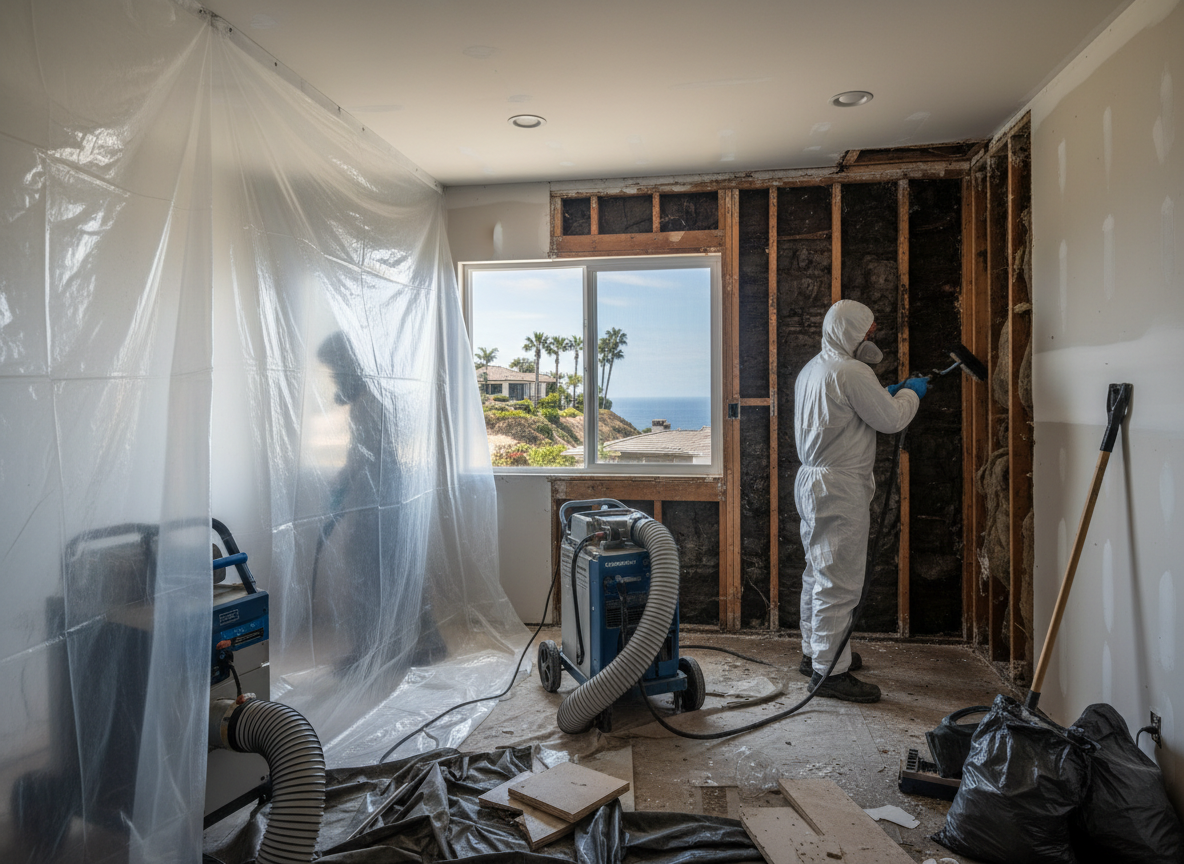
Water intrusion in Palos Verdes Peninsula homes often stems from coastal fog and occasional heavy rains that penetrate older stucco and tile roofs common in Palos Verdes Estates and Rolling Hills Estates. Once moisture reaches drywall or subfloors, mold colonies can establish within 48 hours, especially in poorly ventilated bathrooms or laundry rooms. Our process begins with moisture mapping using thermal imaging to locate hidden pockets behind cabinets or under Portuguese Bend hillside properties where soil retains water longer.
Los Angeles County building codes require proper containment and HEPA filtration during removal to prevent spore spread into living spaces. In Rancho Palos Verdes and Lunada Bay homes, we frequently encounter mold in HVAC systems after roof leaks near the Point Vicente Lighthouse area, where ocean breezes can carry spores across multiple rooms. We remove affected materials, apply EPA-registered antimicrobials, and use air scrubbers until independent testing confirms clearance.
Terrain plays a role in recovery times. Properties near Abalone Cove Shoreline Park sit on slopes that direct runoff toward foundations, extending drying periods compared to flatter lots in Rolling Hills. We deploy commercial dehumidifiers calibrated for the mild Mediterranean climate, which keeps ambient humidity moderate but can leave crawl spaces damp if vents are blocked by vegetation.
Hidden Moisture Risks in Coastal Homes
Ocean breezes often create a false sense of dryness, allowing mold to thrive in wall cavities of 1960s-era homes in San Pedro-adjacent zones. Always verify subfloor moisture levels before new flooring installation.
Technician insight
In Palos Verdes Peninsula, the thing that catches most people out with Mold remediation after water damage is ocean breezes masking persistent moisture in crawl spaces of hillside homes in Rancho Palos Verdes and Portuguese Bend, where clay-heavy soil holds water and delays drying far longer than homeowners expect.
Crawl Space Mold After Roof Leak
A Rancho Palos Verdes home near Terranea Resort developed a slow roof leak during winter rains that soaked insulation above the garage. We found active mold growth extending into the HVAC return and along the foundation wall due to the sloped terrain directing water inward. Containment, selective demo, and targeted drying restored the space without spreading spores into living areas.
How it works
- 1
Initial Assessment
Technicians inspect affected zones in Palos Verdes Peninsula homes using moisture meters and thermal cameras to map water paths.
- 2
Containment Setup
Plastic barriers and negative air machines isolate the work area to stop spore migration into unaffected rooms.
- 3
Material Removal
Porous materials like carpet and drywall are cut out and bagged for disposal following Los Angeles County disposal rules.
- 4
Drying and Treatment
Industrial drying equipment runs until readings drop below 15 percent, followed by antimicrobial application.
- 5
Clearance Testing
Third-party air sampling confirms mold levels return to normal before reconstruction begins.
Pricing
Costs depend on square footage affected and whether hidden mold exists behind walls or in HVAC systems; upfront quotes provided after inspection.