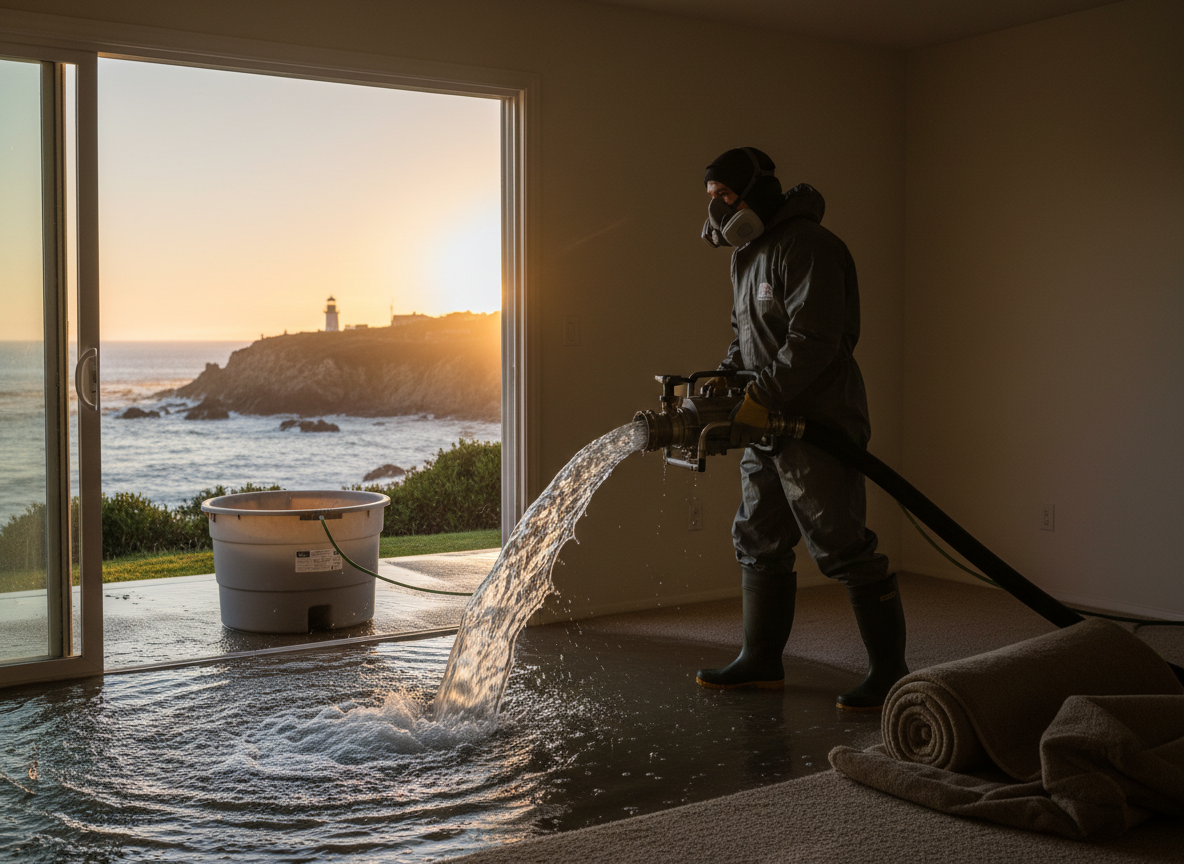
Rapid water extraction in Palos Verdes Peninsula must account for the mild Mediterranean climate and constant ocean breezes that slow visible drying while leaving hidden moisture in older stucco and wood-frame homes common in Palos Verdes Estates and Lunada Bay. Extraction crews use truck-mounted units and submersible pumps to pull water from slab edges and crawl spaces before it migrates into Portuguese Bend landslide-prone soils. Delaying this step even twelve hours often forces additional demolition because salt-laden air accelerates corrosion on metal lath and electrical boxes.
Homes in Rancho Palos Verdes and Rolling Hills Estates frequently sit on sloped lots where water pools against foundation walls rather than draining toward the street. Technicians map moisture with infrared cameras and probe meters to locate pockets behind built-in cabinetry and under terrazzo floors typical of mid-century construction. Extraction stops once readings drop below twenty percent moisture content on concrete and twelve percent on framing, preventing the mold blooms that appear quickly in the region’s moderate humidity.
Los Angeles County building codes require documentation of extraction volumes and drying goals before any reconstruction begins. Crews document every gallon removed and photograph equipment placement so insurance adjusters can verify the work performed on properties near Abalone Cove Shoreline Park or Terranea Resort. Skipping these records can delay claims for homeowners whose policies cover sudden water events but exclude gradual seepage common on the Peninsula’s coastal bluffs.
Technician insight
In Palos Verdes Peninsula, the thing that catches most people out with Rapid water extraction is how ocean breezes keep surface floors feeling dry while water stays trapped under older slab-on-grade homes in Portuguese Bend and Rancho Palos Verdes. Homeowners often stop too soon and later face mold behind baseboards because they never pulled the hidden moisture.
Burst Supply Line Under Kitchen in Rancho Palos Verdes
A supply line failed overnight in a 1960s home on a sloped lot. Water traveled under the slab toward the garage. Crews extracted 180 gallons, placed drying equipment for four days, and returned daily with moisture meters until readings allowed drywall repairs without mold risk.
How it works
- 1
Arrival and Containment
Technicians arrive within two hours, park at the curb on narrow streets like those in Rolling Hills, and set up containment barriers to keep extracted water from flowing into neighboring yards.
- 2
Standing Water Removal
Truck-mounted extraction units pull bulk water from floors and low points, followed by wand work along baseboards in living areas and kitchens typical of Palos Verdes Estates homes.
- 3
Moisture Mapping
Infrared scans and pin meters locate residual moisture in walls and under flooring, paying special attention to hillside homes in Rancho Palos Verdes where water travels laterally through soil.
- 4
Equipment Placement and Monitoring
Air movers and dehumidifiers are positioned, with daily return visits to adjust settings until the structure meets drying standards required by Los Angeles County inspectors.
Pricing
Cost depends on water volume, number of affected rooms, and access difficulty on sloped lots common throughout Palos Verdes Peninsula.