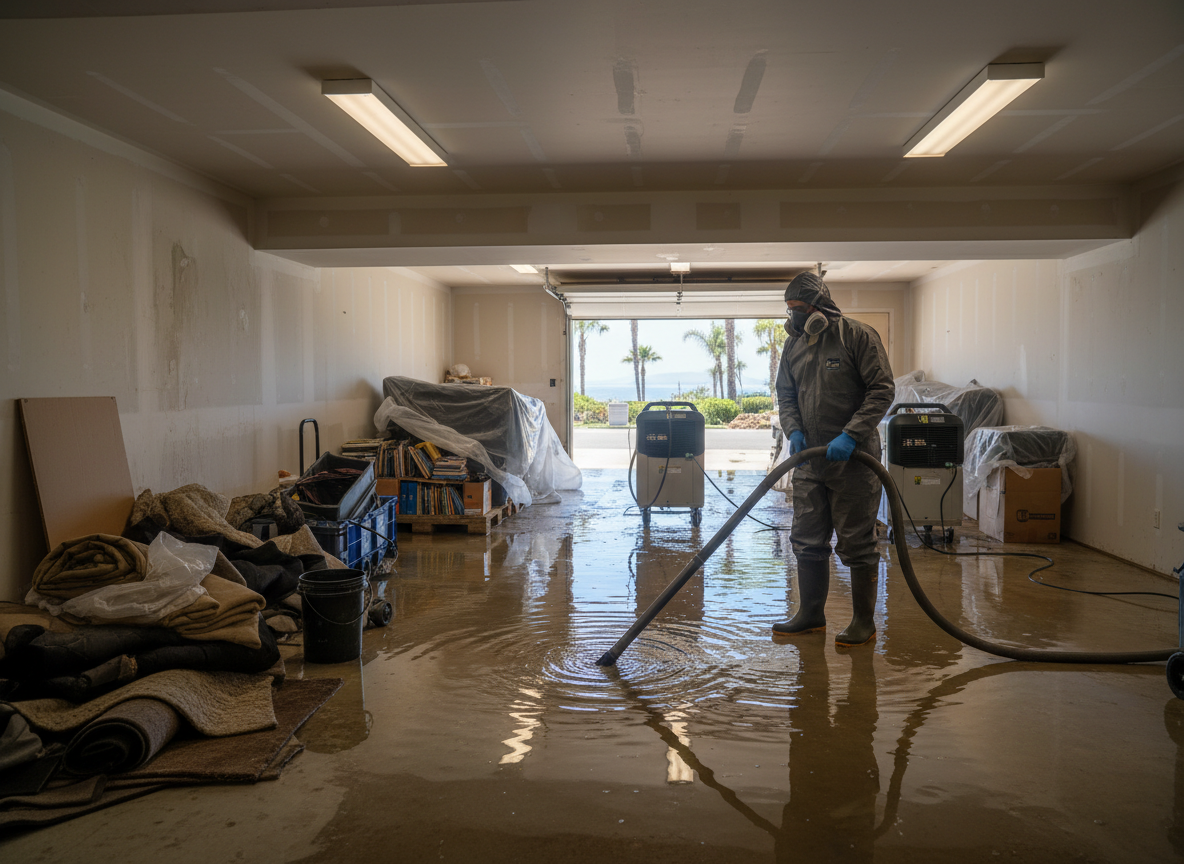
Basement flood cleanup in Palos Verdes Peninsula often involves older concrete foundations common in neighborhoods like Portuguese Bend and Lunada Bay. These homes sit on sloping terrain where winter rains combine with persistent ocean breezes to push moisture through hairline cracks and around window wells. Technicians must first isolate electrical hazards and remove standing water before addressing trapped moisture in soil against the foundation walls. Failure to extract water from the gravel layer beneath the slab can lead to recurring humidity issues months later.
In Rancho Palos Verdes and Rolling Hills Estates, many basements feature finished walls and flooring installed decades ago. When floodwater enters, it quickly saturates particleboard and carpet padding, creating conditions for hidden mold growth behind baseboards. Extraction equipment must reach under cabinets and into HVAC returns without disturbing original plaster or tile work. Crews document moisture readings at multiple depths in the concrete to confirm the slab has returned to acceptable levels before any reconstruction begins.
Los Angeles County building practices in coastal zones require proper drainage away from foundations, yet many properties in Palos Verdes Estates still rely on older French drains that clog with clay-heavy soil. During cleanup, crews often find that surface grading directs runoff toward basement entries during heavy downpours. Thorough drying includes dehumidifiers sized for the square footage and air movers placed to create negative pressure that pulls moisture from wall cavities without spreading spores to upper levels.
Technician insight
In Palos Verdes Peninsula, the thing that catches most people out with Basement flood cleanup is how ocean breezes keep feeding moisture into hillside foundations in places like Portuguese Bend even after the rain stops. Homeowners often seal the floor too soon and trap humidity that later damages finished walls.
Hillside runoff in Rancho Palos Verdes
Heavy winter rain sent water down the slope and into a basement entry in Rancho Palos Verdes. We found moisture had wicked up several inches into drywall and under the slab edge. Extraction and targeted drying equipment dried the concrete and cavities without removing the original tile floor. The homeowner was able to resume use of the space within a week.
How it works
- 1
Initial Assessment
Technicians arrive within hours, locate the water source, and map moisture throughout the basement using meters on concrete, wood, and drywall.
- 2
Water Extraction
Standing water is removed with submersible pumps and wands, followed by removal of saturated carpet, padding, and baseboards.
- 3
Drying and Dehumidification
Industrial air movers and dehumidifiers run continuously while daily moisture readings track progress in walls and under the slab.
- 4
Sanitization and Monitoring
Antimicrobial treatments are applied where needed, then final readings confirm the space is dry before any rebuild work starts.
Pricing
Cost depends on water volume, affected square footage, and whether hidden moisture exists behind finished walls; upfront quotes are provided after inspection.