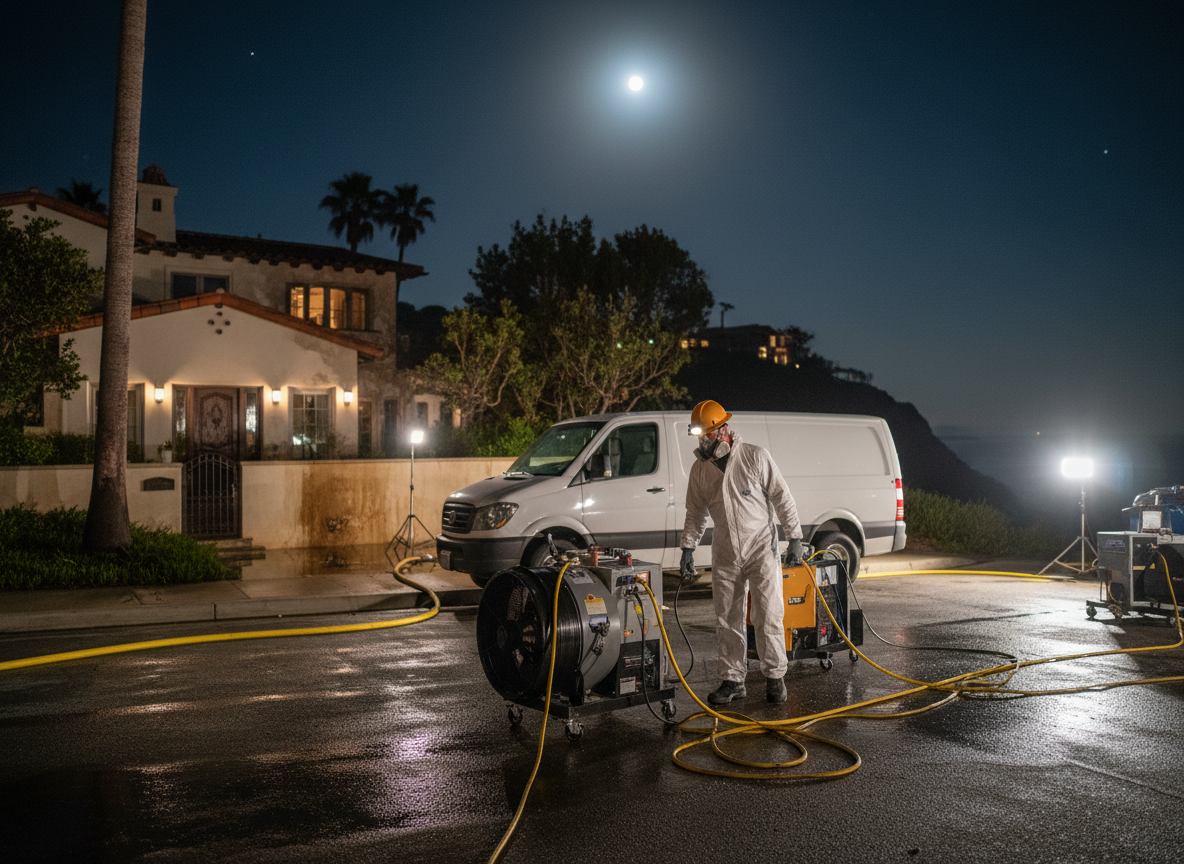
Palos Verdes Peninsula homes often sit on steep coastal slopes where ocean breezes carry salt-laden air year-round. This mild Mediterranean climate keeps temperatures moderate but allows hidden moisture to linger inside stucco walls and under tile roofs common in neighborhoods such as Lunada Bay and Portuguese Bend. When a pipe bursts or a roof leak appears, water travels quickly along the hillside contours and pools in crawl spaces or behind retaining walls, creating conditions that standard box fans cannot fully address.
Los Angeles County building practices from the 1960s onward left many Rancho Palos Verdes and Rolling Hills Estates properties with older plumbing lines and limited access points. Technicians must remove baseboards and drill small inspection holes to reach saturated drywall without triggering unnecessary demolition. Ocean air also accelerates corrosion on metal HVAC components, so restoration crews check ductwork in addition to flooring and subfloors.
Emergency crews dispatched from 2516 Vía Tejon reach properties in San Pedro and Rolling Hills within minutes because traffic patterns and narrow canyon roads are well known. They deploy moisture meters calibrated for local soil types and track readings over multiple days to confirm that hillside drainage has not reintroduced water. This step prevents repeat calls that occur when homeowners assume surface drying is sufficient.
Technician insight
In Palos Verdes Peninsula, the thing that catches most people out with 24-hour water restoration near me is how ocean breezes keep feeding moisture back into older stucco homes on slopes like those in Portuguese Bend and Abalone Cove. Homeowners often stop drying too soon because surface temps feel normal, yet readings inside wall cavities stay elevated for days longer than in inland Los Angeles County neighborhoods.
Nighttime pipe leak in Rancho Palos Verdes
A supply line failed behind a bathroom wall after sunset. Water migrated downward along the slope and collected under the master bedroom floor. Crews extracted standing water, placed drying equipment through small access points, and returned daily until meters confirmed dry conditions in the subfloor. The homeowner avoided full room gutting.
How it works
- 1
Arrival and Safety Assessment
Technicians arrive 24/7, shut off water sources, and map electrical hazards before any extraction begins.
- 2
Water Removal
Truck-mounted pumps and portable extractors pull standing water from floors, carpets, and wall cavities.
- 3
Drying and Monitoring
Air movers, dehumidifiers, and daily moisture logs continue until readings match unaffected areas of the home.
- 4
Sanitization and Final Check
Antimicrobial treatment is applied where needed, followed by a walkthrough with the homeowner.
Pricing
Upfront quotes after on-site inspection; final cost depends on water volume, affected square footage, and number of monitoring days required.