2026-10-15 ·
Winter Rain Risks For Homes On The Palos Verdes Peninsula
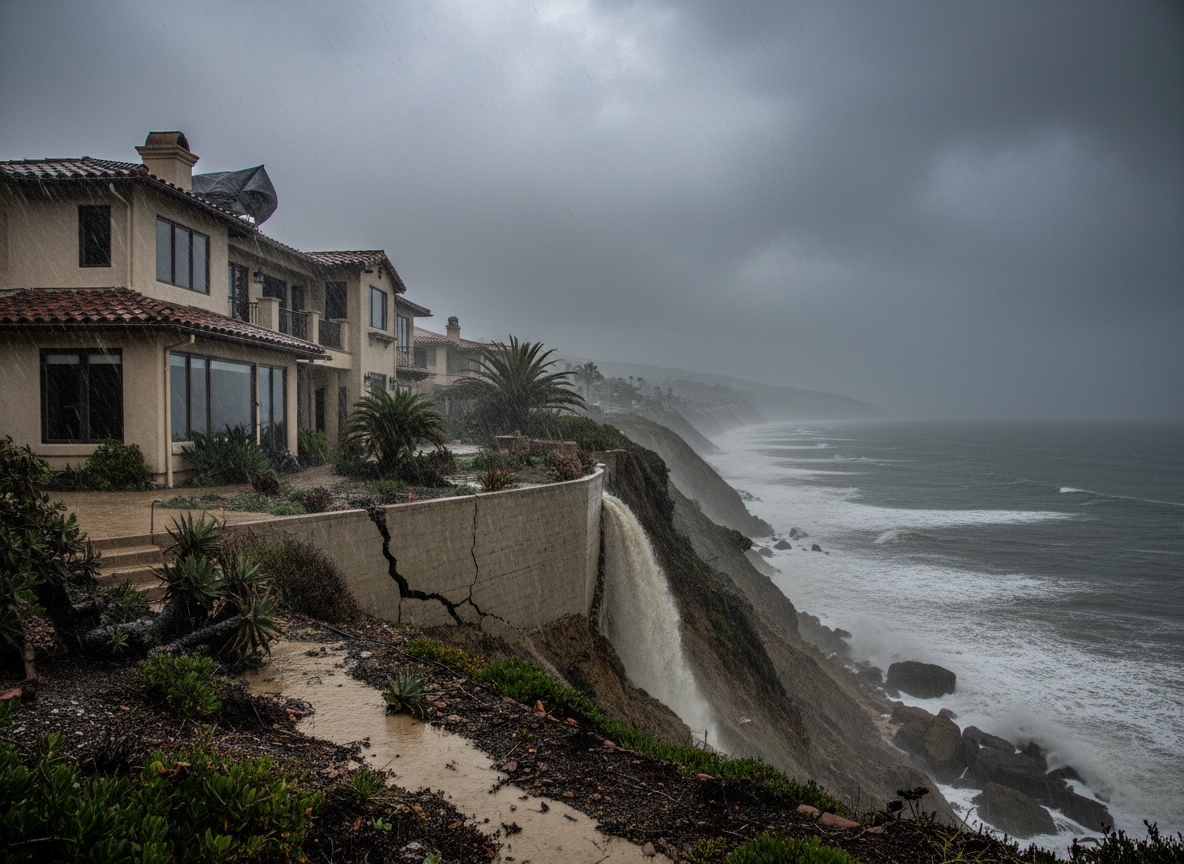
Winter rains create measurable intrusion risks for homes on the Palos Verdes Peninsula, especially where slopes direct runoff toward foundations in Palos Verdes Estates and Rancho Palos Verdes. The mild Mediterranean climate delivers most annual precipitation between November and March, and ocean breezes keep surfaces damp longer than inland Los Angeles County locations. Homes built on the peninsula's hilly terrain face added pressure from saturated soil that expands and pushes against retaining walls and slabs.
Slope and Soil Conditions During Winter Storms
The peninsula's steep grades in Rolling Hills and Rolling Hills Estates channel rainwater quickly toward lower foundations and crawl spaces. Clay-heavy soils common in these neighborhoods expand when wet, creating hydrostatic pressure that forces moisture through cracks in concrete and stucco. Ocean breezes slow evaporation after each storm, leaving wood framing and sheathing damp for days longer than in drier inland spots like San Pedro. Homeowners notice first signs along downhill walls where water pools against the structure for hours after rain stops.
Terrain realities change the job on every call. Properties near Abalone Cove Shoreline Park or Portuguese Bend often sit on fill or cut slopes that shift slightly each season, opening new gaps at sill plates. In contrast, flatter lots in Lunada Bay still contend with sheet flow from streets that funnels water under garage doors. These patterns repeat across the area because the underlying geology and coastal exposure stay consistent year after year.
Common Entry Points in Peninsula Housing Stock
Many homes built before 1980 feature single-pane windows and older roof flashings that fail first during sustained winter rains. Water travels along stucco cracks widened by salt air, then reaches interior framing in Rancho Palos Verdes and Rolling Hills Estates neighborhoods. Attics and crawl spaces collect moisture when roof valleys or skylight curbs leak, especially on homes with complex rooflines common on hillside lots.
Concrete slabs on grade also absorb water at expansion joints when soil saturation lasts more than 48 hours. Garages and lower-level rooms in Palos Verdes Estates frequently show staining along the rear wall where driveway runoff meets the foundation. These entry points appear repeatedly because the same construction methods and slope orientations exist throughout the peninsula.
How Prolonged Moisture Affects Local Materials
Wood framing in peninsula homes can stay above 20 percent moisture content for weeks after heavy rain if airflow remains limited. This extended dampness softens subfloors and baseboards in contact with slab edges, particularly in older Rolling Hills properties. Drywall paper facing delaminates once relative humidity inside wall cavities stays elevated, leading to visible bubbling near baseboards within two to three weeks.
Metal lath in exterior stucco can corrode where water sits against the wall for extended periods, weakening the finish coat over time. These material changes occur faster here than in inland Los Angeles County because ocean breezes maintain higher ambient humidity between storms.
Practical Steps After Winter Rain Events
Check downhill foundation walls and window wells within 24 hours after each storm for standing water or new staining. Clear debris from area drains and downspout extensions so water moves away from the structure rather than pooling. Document any visible moisture with dated photos before it dries, especially in crawl spaces and attics where access is limited.